How to trade in top lane: short trades and minion aggro
Jump to section
How to trade in top lane comes down to timing: step forward when the enemy is weak and step back before they can answer. A trade is a small exchange of damage that leaves the enemy lower than you. Win enough of them and the enemy cannot hold lane, which gives you the wave, the plates and the kill.
Learning how to trade in top lane is the fastest way to win more lanes. This guide covers the two kinds of trade, how minion aggro changes every fight, and how to use cooldowns and level spikes. It also covers trading into ranged champions and trading near towers.
How to trade in top lane: the two kinds of trade
Every trade in top lane is either short or extended. Your champion and the matchup decide which one you want.
- Short trade: a quick combo, then you leave before the enemy can respond.
- Extended trade: a longer fight where both champions stay in range.
Most lanes are won through many small trades. So learn which kind your champion wins, then look for chances to take it. Knowing how to trade in top lane starts with knowing your own champion's strengths.
Short trades
A short trade is a quick burst of damage, followed by walking away before the enemy can hit back.
Take a short trade when the enemy goes for a last-hit, because their attention is on the minion. Also take one when they use a key ability on minions. Short trades suit champions with strong burst who lose longer fights.
Leave on time. A short trade turns into a losing extended trade if you stay one auto attack too long.
Extended trades
An extended trade is a longer fight where both champions stay in range and keep hitting each other.
Take one when your champion wins long fights through healing, stacking passives or sustained damage. Before you commit, check your health, the enemy's health and both minion waves. If their wave is bigger, the minions will add damage on their side.
Minion aggro
Minion aggro is the hidden part of how to trade in top lane. Hitting an enemy champion near their minions makes those minions attack you. Early in the game, that is a lot of damage.
According to the League of Legends Wiki, minions react when you damage an enemy champion with a basic attack or most targeted abilities. They pick this up from about 500 units away. An enemy champion that is being attacked can even pull minions from up to 1,000 units.
So trade when the enemy wave is small, or when you stand outside it. Then pull back so the minions lose interest before your next trade. The reverse also works: if the enemy trades with you inside your big wave, they take that damage instead. That is why a bigger wave is a trading advantage, and why top lane wave management and trading go together.
How to trade in top lane around cooldowns
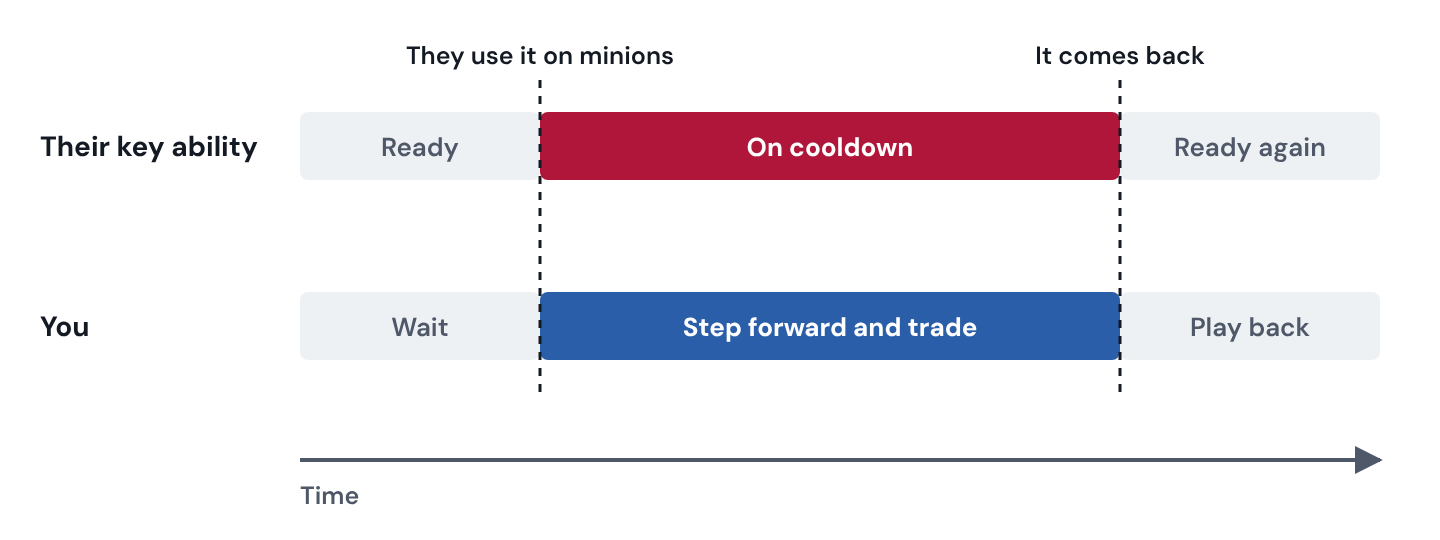
Cooldowns are the clock behind how to trade in top lane. Each champion has one ability that wins or loses trades, such as a dash, a shield or crowd control. When the enemy uses it, you have a window until it comes back. That is when you step forward.
When your own key ability is down, play back until it is ready. Two well known examples are Counter Strike on Jax and Riposte on Fiora. Both can turn a trade around if you walk into them.
Level spikes
Reaching level 2 or 3 before the enemy gives you an extra ability for trading. So the race to level 2 is the first trade of the game.
In a solo lane, level 2 usually comes once the first wave dies and one or two minions from the second wave follow. Guides count it slightly differently, so watch your experience bar instead of counting minions. If your wave pushes first, you usually hit level 2 first and can trade straight away.
Level 3 and level 6 matter too. Each new ability or ultimate changes who wins a trade, so know when the enemy gets theirs.
Trading patterns that work
A trading pattern is a short, repeatable combo you use whenever a window opens. Most melee top laners use one of these:
- Auto, ability, auto: an auto attack reset combo, common on duelists like Fiora and Camille.
- Engage and leave: dash in, use your burst, then dash or walk out before the minions turn on you.
- Bait and punish: step forward to draw out the enemy's key ability, then trade while it is down.
Practise your pattern in a custom game first. Then you can use it in lane without thinking.
Also learn the enemy's pattern. If you know which combo they use, you know which ability to wait out before you step forward. Most of how to trade in top lane is reading that one ability and acting the moment it is gone.
How to trade into a ranged top laner
Ranged top laners trade by hitting you from outside your range. So avoid standing in that range for free.
First, let the wave come to you. A wave near your tower makes the ranged champion walk forward to farm, which gives you a window to engage. Then use your gap closer only when you can finish the trade. Also ask your jungler for help early, because ranged champions are easy to gank once they push.
A full guide on how to beat ranged top laners is coming soon.
Trading near your tower or theirs
Where the trade happens matters as much as the trade itself.
Near your own tower, you are safe. If the enemy dives in to trade, your tower helps you. Near their tower, the risk is reversed: trade too long there and their tower joins the fight.
So take your longest trades near your own tower or in the middle of the lane. Near their tower, stick to short trades and leave before the tower targets you.
Common trading mistakes
- Trading inside their wave. The minions add damage on their side, so you lose a trade you should win.
- Staying too long. A short trade turns into a losing extended trade one auto attack later.
- Trading into their key ability. If their dash, shield or crowd control is up, wait.
- Forgetting the jungler. A won trade means little if the enemy jungler arrives while you are low.
Once trades feel natural, read the full top lane climbing guide to see how trading fits with the rest of the role.
Questions players ask
What is the best way to learn how to trade in top lane?
The best way to learn how to trade in top lane is to start with short trades. Hit the enemy when they go for a last-hit or use an ability on minions, then walk away before they can answer. Once that feels natural, learn when your champion wins longer fights and trade around the enemy's key cooldown.
What is minion aggro?
Damaging an enemy champion near their minions makes those minions attack you for a short time. Trading inside a large enemy wave adds minion damage on top of the laner's damage. So trade when their wave is small or when you stand outside it.
When do you hit level 2 in top lane?
In a solo lane, level 2 usually comes after the first full wave plus one or two minions from the second wave. If your wave pushes first, you usually reach it first and can trade with the extra ability before the enemy.
 X



Sources
- Minion (League of Legends) (League of Legends Wiki)
- How to survive the laning phase (Mobalytics)
- A guide to understanding the basics of the laning phase (Dignitas)
- 5 tips to have a strong early game (Mobalytics)
Checked on 20 November 2026, reviewed for patch 26.23. Abilities and numbers can change with patches. How guides are written